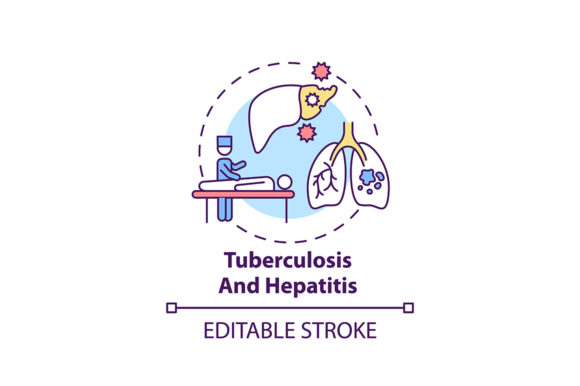
Reviewing the Tuberculosis and Hepatitis Concept Icon
As a designer who spends half my life staring at digitized files and the other half watching needles punch through fabric, I have learned that not every graphic translates well to thread. We often browse marketplaces looking for the perfect machine embroidery design, drawn in by clean vector lines and modern aesthetics. Recently, I spent some time evaluating the Tuberculosis and Hepatitis Concept Icon. This isn’t your typical floral motif or cute animal silhouette; it is a specialized piece of medical imagery designed to represent occupational sickness and dangerous diseases for medical workers. My goal here is to break down how this specific Icons and Graphics asset performs when moved from a digital screen to a tangible, stitched reality.
First Impressions: Clarity in Minimalism
The first thing that strikes you about the Tuberculosis and Hepatitis Concept Icon is its restraint. It utilizes a thin line illustration style, which is increasingly popular in modern branding but can be tricky in embroidery. The concept relies on symbolic representation rather than literal depiction. For an embroidery project, this is a double-edged sword. On one hand, the simplicity means fewer stitch jumps and potentially faster run times. On the other hand, "thin line" in a vector file does not automatically mean "single running stitch" in an embroidery file.
When I opened the preview, the mood felt clinical yet urgent. It captures the seriousness of occupational hazards without being overly grim. For a craft business owner or an Etsy seller specializing in niche apparel, this visual personality is crucial. It doesn’t scream for attention with loud colors; instead, it invites a closer look. This subtlety makes it ideal for products where professionalism and awareness are key, such as scrubs, nurse bags, or educational materials for healthcare training.
Real-World Application: The Medical Tote Bag Scenario
To truly test the viability of this design, I imagined a real-life scenario: creating a custom embroidered tote bag for a nursing student graduation gift. This is a common request for small shop owners. The bag is made of heavy canvas, a fabric texture that can swallow up fine details if the stitch density isn’t managed correctly.
In this context, the Tuberculosis and Hepatitis Concept Icon serves as a powerful statement piece. Unlike a decorative accent, this icon carries weight. If I were stitching this onto a tote bag design, I would likely place it centrally or on the lower corner for a boutique branding feel. The challenge here is ensuring the "thin line" aesthetic survives the transition to thread. If the digitizer has converted those vector lines into a simple running stitch, the result on canvas could look sparse or uneven. However, if it has been appropriately digitized with a slight satin stitch border or a denser running pattern, it will hold up beautifully against the rough weave of the canvas.
This same logic applies to sweatshirt embroidery. A hoodie or crewneck offers a softer, loftier surface. Here, the contrast between the thread colors and the fabric becomes paramount. Since this is an RGB color drawing in its source format, you have the flexibility to choose thread colors that pop. For a dark navy sweatshirt, using a bright medical blue or stark white thread would ensure the icon remains legible. For a light gray garment, a deep charcoal or black thread would provide the necessary definition.
Navigating Technical Challenges
While the concept is strong, there are areas where caution is required. The description notes it is a "vector isolated outline," which suggests editable strokes. However, as an experienced reviewer, I must advise you to check the actual embroidery file specifications before purchasing or stitching. Does the file maintain the integrity of the thin lines at smaller hoop sizes?
If you plan to use this on curved surfaces like caps or hats, be wary. Cap embroidery requires designs that are not too wide and have minimal pull compensation issues. A complex arrangement of thin lines can distort easily on the stiff, curved front of a baseball cap. I would recommend testing this design on a scrap piece of similar fabric first. Check how the stabilizer interacts with the stitch density. If the design feels too dense, it might pucker the fabric, especially on thinner materials like baby clothes or lightweight t-shirts.
Another critical consideration is the scale. Tiny lettering or intricate corners in medical icons can become blobs of thread if scaled down too far. If you are creating a small embroidered patch, ensure that the essential elements of the tuberculosis and hepatitis symbols remain distinct. You might need to enlarge the design slightly beyond your initial plan to preserve clarity. Always inspect small details in a preview mode that simulates stitch direction, not just the final color fill.
Commercial Viability and Brand Consistency
For commercial embroidery projects, consistency is king. If you are an Etsy seller or a small business owner creating a line of awareness apparel, this icon needs to look professional across different products. Whether it’s on an apron for a lab technician or a pillow cover for a hospital waiting room decor, the visual appeal must remain high.
The Tuberculosis and Hepatitis Concept Icon adds value by signaling expertise and awareness. It builds customer trust because it shows that the creator understands the specific language of the medical community. It is not just a generic heart or cross; it is specific. This specificity can drive buyer engagement among healthcare professionals who feel seen and understood by the product.
However, you must confirm licensing before selling finished items. The product description mentions a ZIP file, but it does not explicitly state the commercial license terms. Always verify whether the design assets allow for unlimited sales of physical goods or if there are restrictions. This is vital for protecting your craft business from legal issues down the line.
Practical Designer Notes for Best Results
To get the most out of this design, consider these practical steps:
- Test on Scrap Fabric: Never stitch directly on your final garment. Use a similar fabric texture to check for puckering or thread breaks.
- Check Thread Color Contrast: Since this is a line illustration, low contrast between thread and fabric will make the design invisible. Test it in black and white mockups to ensure the shape holds up without color reliance.
- Review Stitch Density: If the file allows, check the density settings. Too dense, and it becomes stiff; too light, and the fabric shows through uncomfortably.
- Confirm Hoop Size: Ensure the design fits comfortably within your machine’s hoop without needing excessive re-hooping, which can lead to misalignment.
- Use Proper Stabilizer: For stretchy fabrics like t-shirts, a cut-away stabilizer is often better than tear-away to prevent distortion of the thin lines over time.
- Verify File Formats: The description mentions a ZIP file, but check inside for the specific embroidery file formats compatible with your machine (e.g., PES, DST, JEF).
In conclusion, the Tuberculosis and Hepatitis Concept Icon is a thoughtful addition to a designer’s library, particularly for those serving the medical sector. It bridges the gap between serious health messaging and aesthetically pleasing design. With careful attention to stitch density, fabric choice, and scaling, it can elevate a simple handmade product into a meaningful personalized gift or a standout item in a small shop product lineup. Just remember: the digital preview is only the beginning. The true test is always in the stitching.